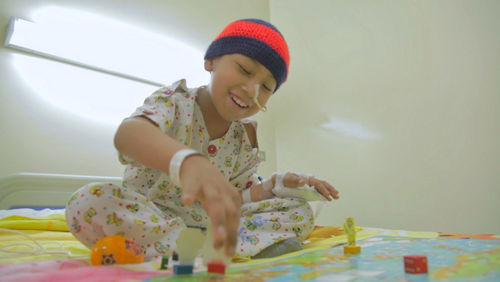
Sickle cell disease (SCD) affects nearly 8 million people worldwide and remains a leading, yet often overlooked, cause of childhood illness and death. In settings with a high disease prevalence and limited resources, up to 90% of children with sickle cell disease die before age five, a drastic comparison to resourced countries, where survival is 95% in the first five years of life.
As global attention increasingly focuses on child survival, health equity and strengthening health systems, there is growing recognition that greater coordination is needed to address the burden of sickle cell disease at scale. Efforts across countries, regions and organizations have advanced significantly in recent years, creating new opportunities to align priorities, share knowledge and accelerate progress.
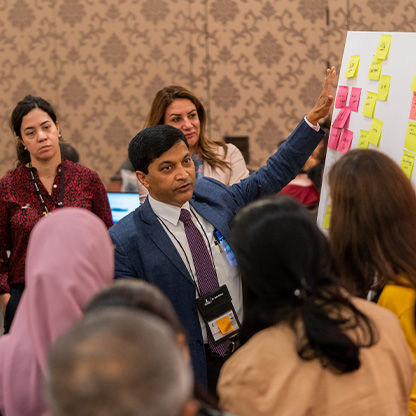
This high-level UNGA side event brought together government leaders, multilateral organizations, health experts, civil society representatives and people with lived experience to discuss how the global community can work together to improve outcomes for people affected by sickle cell disease.
About the event
Cohosted by the governments of Nigeria, India, Uganda, Jamaica and St. Kitts and Nevis, United Nations Children’s Fund (UNICEF), World Health Organization (WHO), Africa Centres for Disease Control & Prevention (CDC), St. Jude Children’s Research Hospital and the World Coalition on Sickle Cell Disease (WCSCD), this UNGA81 side event explored opportunities to strengthen collaboration around a shared vision for addressing sickle cell disease globally.
Present the vision, scope and strategic goals of OneSCD: A Global Partnership to Advance Equity and Transform Sickle Cell Care
Highlight regional and country-level implementation approaches, as represented by champion countries and regional agencies, with focus on developing a core package of scalable interventions and underlying normative requirements
Introduce the proposed governance structure, workstreams and coordination mechanisms of the partnership
Identify concrete opportunities for partner leadership, accelerated investment and collaboration
Outline a partnership road map toward 2040
Why this matters
Significant advances have been made in understanding and treating sickle cell disease, yet access to these advances remains highly unequal. Closing this gap will require coordinated action across health systems, governments, international organizations, health care providers, advocates and communities.
By bringing together leaders and stakeholders from around the world, this event strengthened partnerships, amplified lived experience and built momentum toward a more comprehensive and equitable response to sickle cell disease.